
CHAPTER 11 · COACH QUALITY
Look beyond
the playing résumé.
Playing experience can be valuable. Teaching, planning, communication and athlete development need their own evidence.
Questions to ask a coach →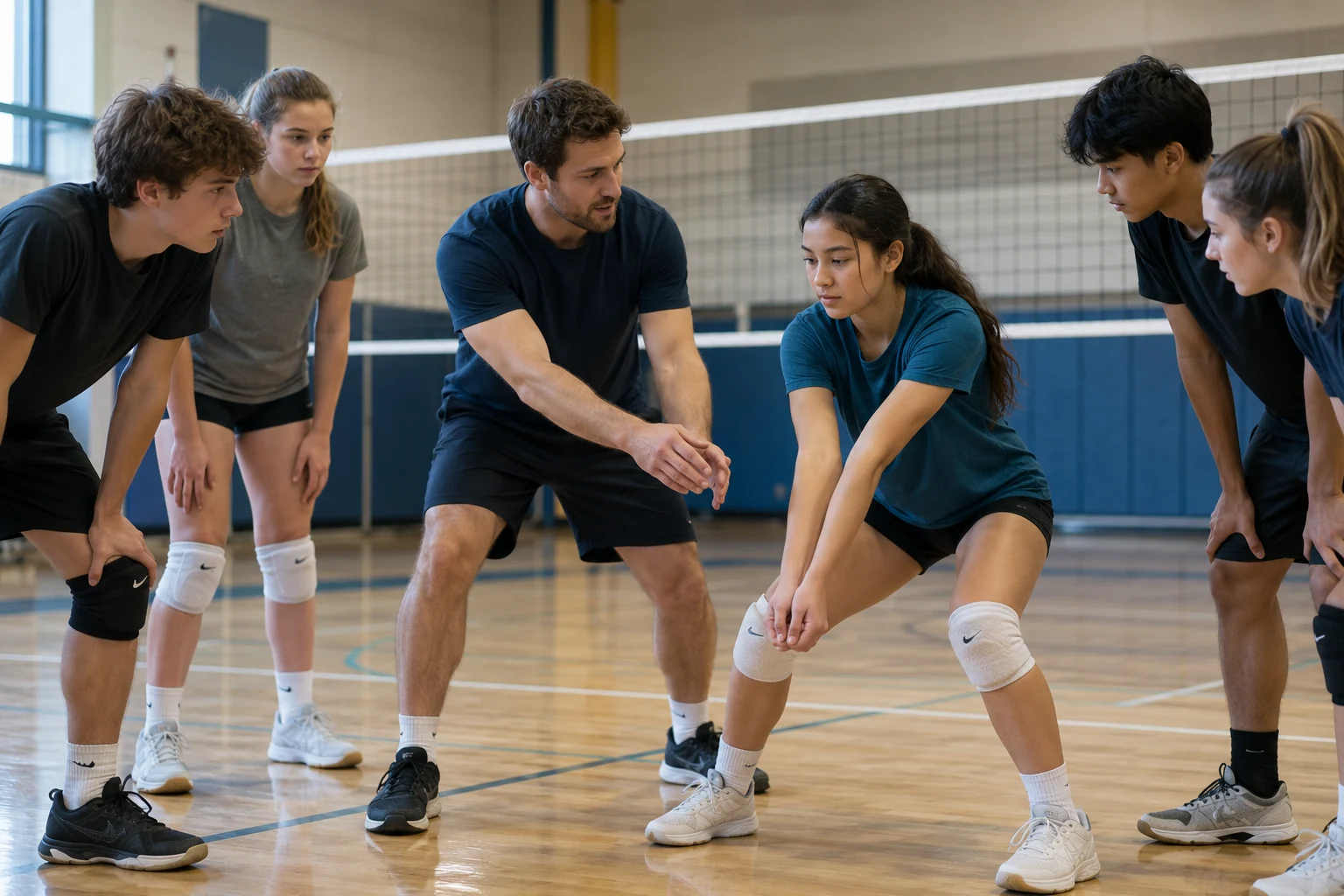
THE CENTRAL POINT
A strong player is not automatically a strong coach.
Playing at a high level does not, by itself, make someone a qualified or capable coach.
A playing résumé describes an athlete’s experience. A coaching résumé should show how that person helps other athletes learn, develop and participate in an appropriate environment.
A former university, professional or national-team athlete may bring insight into competition, technique and preparation. Parents should also ask about coaching education, evaluation, experience with this age group, teaching methods and current responsibilities. Playing background and coaching competence should be assessed separately.
The documented basis: the Coaching Association of Canada’s NCCP framework addresses communication, practice planning, performance analysis, ethical decisions and athlete support. These are coaching responsibilities that go beyond performing a skill yourself. [1] Volleyball Canada’s Development Coach certification pathway includes a portfolio and evaluations of performance analysis and support to athletes in training. [2]
The conclusion above is this guide’s practical interpretation of those frameworks. It is not a finding about a particular coach, or a claim that elite playing experience predicts poor coaching.
WORDS THAT MEAN DIFFERENT THINGS
Experience, training and certification.
| Description | What it tells you | What to ask next |
|---|---|---|
| Played at a high level | Relevant experience as an athlete. | What have you learned about teaching athletes who are still developing? |
| NCCP In Training | A stage within a specific coaching pathway. | Which components are completed, and what remains? |
| NCCP Trained | The training requirements for the stated context have been completed. | Is evaluation required or planned for this role? |
| NCCP Certified | The applicable certification and evaluation requirements have been met. | Which context and discipline? Is the status active? |
| Years of coaching | Time spent in coaching roles. | Which age groups, responsibilities and development outcomes? |
Volleyball Canada distinguishes In Training, Trained and Certified designations, with separate indoor and beach pathways where specified. Do not treat attendance at a course as proof of every certification stage. [2]
Certification is useful evidence to verify alongside current practice. Ask how the coach applies their learning and how the club provides supervision, feedback and development. A certificate, playing history and an impressive team record each answer different questions.
How to check a claim
Ask the coach or club for the relevant qualification, context and current status. The Coaching Association of Canada’s current Locker guidance says coaches can download and share their transcript, and organisations should request it from the coach. The former public-access function has been removed; parents should not assume they can search anyone’s transcript freely. [6]
For screening, ask the club to confirm that its requirements have been verified through the appropriate process. Keep qualification questions focused on the role rather than asking the coach to distribute private screening documents to every family.
BRITISH COLUMBIA · CURRENT SEASON CHECK
Confirm the rules for this coach’s role.
Reviewed October 12, 2026. The official pages below publish 2027 requirements. Requirements can change, and provincial participation and Nationals participation are different contexts.
The published requirements allow different education stages depending on role and experience. Ask whether the coach meets the requirements that apply to this team now and what further education is planned.
BC club requirements
Volleyball BC’s 2027 page identifies screening and Safe Sport, Make Ethical Decisions and Making Head Way requirements. It also requires Foundations of Volleyball for first-year head coaches; the Development Coach workshop is recommended for that first year. Second-year-and-later head coaches must complete or be registered in that workshop by the stated March 1 deadline. The page says requirements apply regardless of attendance at Provincials. [4]
Youth Nationals requirements
Volleyball Canada’s 2027 policy requires Person in Authority screening and safety components, plus coaching modules including Making Head Way, Foundations of Volleyball and Make Ethical Decisions. Head-coach progression is tied to Nationals participation: a workshop is required for the second year, and active Certified Development Coach status for the third year or more. The policy specifies March 15, 2027 for the coaching requirements and describes exceptions and sanctions separately. Read the complete policy for the actual role and history. [3]
Continuing education matters
Volleyball Canada requires Certified coaches to maintain active status through professional development and continuing education, recorded through the NCCP Locker. Ask what the coach has learned recently and how that has changed their practice. [8]
A useful club response identifies the responsible coach, the applicable requirements, what has been verified and how any outstanding steps will be handled. A general statement that “all our coaches played university” does not answer those questions.
WATCH HOW LEARNING HAPPENS
What capable coaching looks like in practice.
The following are observation prompts, not an official scoring system. Ask permission to observe a practice and respect the club’s arrangements. Look for patterns across sessions rather than judging one difficult rally or one rushed explanation.
| Area | Useful evidence | A question to explore |
|---|---|---|
| Teaching | A clear explanation, demonstration and a chance to try the skill. | Can the athlete explain what they are trying to change? |
| Progressions | Tasks are adjusted when an athlete is not ready for the full skill. | What is the next achievable step for this athlete? |
| Feedback | A specific action to try, followed by a chance to apply it. | Does “work harder” come with useful direction? |
| Practice planning | Activities connect to a stated learning goal. | Why are we doing this drill, and where does it appear in a match? |
| Communication | Instructions and expectations are understandable. | Can an athlete ask for clarification respectfully? |
| Individual needs | The coach notices differing experience, confidence and readiness. | How is the task adapted without embarrassing the athlete? |
| Team environment | Corrections preserve dignity and include athletes who are not starting. | How does the coach support the whole roster? |
| Reflection | The coach reviews what worked and changes the plan when needed. | What did the staff learn from the session? |
Knowing a skill and teaching it are different tasks
An experienced player may perform a movement automatically. A developing athlete needs an explanation they can understand, an appropriate task and feedback they can use. “Do it the way I did” is a starting reference at most; ask how the coach turns that experience into a teachable progression.
A useful teaching conversation might identify one manageable change, demonstrate it, let the athlete try and then check whether it helped. Repeating “pass better” without explaining a next action gives the athlete little to work with.
This example illustrates a feedback question. It is not a prescribed volleyball technique or a judgment about every correction a coach makes.
NCCP competencies include modifying practice plans, reflecting on coaching practice and communicating with participants and parents. Those are useful areas to explore when asking how a coach teaches. [1]
LOOK AT THE ATHLETE’S EXPERIENCE
Ask what is improving alongside the results.
Competition results belong in the conversation, along with the skills, decisions and habits athletes are developing. Ask for examples of progress and the next learning priorities. An impressive win-loss record does not explain the learning experience of every athlete on the roster.
The Coaching Association of Canada’s Quality Coaching Toolkit broadens success to include personal development, enjoyment, a desire to remain in sport, individual performance measures and well-being. It draws on research involving Canadian Olympic and Paralympic athletes and offers ideas for competitive sport environments. [5]
- Skill development: what can the athlete do more reliably now?
- Decision-making: can they explain what they saw and why they chose an action?
- Confidence: can they ask questions and attempt an adjustment after an error?
- Responsibility: do they understand preparation, team expectations and their current role?
- Next steps: does the coach provide a realistic priority for improvement?
Ask athletes directly: “What did you learn?” “What feedback helped?” and “What happens when you do not understand?” Keep that conversation open rather than telling them which answer you expect.
Development should include the whole roster
Ask how substitutes and athletes learning a new position receive instruction. A meaningful development plan need not promise equal match minutes, but it should explain the programme’s expectations, opportunities to practise and how athletes can work towards greater responsibility. Discuss those terms before accepting a place.
BEFORE ACCEPTING AN OFFER
Ten questions worth asking.
- What coaching education and current status do you hold? Ask for the context and whether it meets the requirements for this role.
- What experience do you have coaching this age group? Coaching adults and teaching young athletes involve different practical expectations.
- How do you teach an athlete who does not understand the first explanation? Listen for specific alternatives or progressions.
- How is a practice planned? Ask how learning goals connect to drills and competition.
- How do athletes receive feedback? Ask about individual conversations and opportunities to apply a correction.
- How do you support athletes who are not starting? Clarify training opportunities, roles and development goals.
- How are playing time and position decisions explained? Ask for the team’s stated approach without requesting guarantees the programme does not offer.
- What are the communication and safeguarding arrangements? Ask who handles welfare concerns and how the club supervises coaching staff.
- What mentoring or professional development do you use? Look for ongoing learning, including feedback on the coach’s own work.
- How will we review our athlete’s progress? Agree on a realistic process and an appropriate time for follow-up.
“Your playing background is impressive. We would also like to understand your coaching approach. What training have you completed, how do you teach athletes at this age, and how do you track their development?”
Take notes on the answer and any promised follow-up. Compare the explanation with what you see over time, rather than relying only on marketing language or a former team’s reputation.
WHEN THE EXPERIENCE DOES NOT MATCH THE PROMISE
Raise specific observations.
Pay attention when questions about qualifications receive only a playing-history answer, repeated corrections provide no actionable instruction, or athlete questions are routinely dismissed. These are reasons to seek clarification. They are not enough on their own to label someone incompetent.
For a teaching or development concern
- Write down what happened, when and what the athlete understood.
- Use the agreed communication route and ask about the learning goal or missing explanation.
- Request a practical next step and a time to review progress.
- If it remains unresolved, bring the specific concern to the club’s designated leader.
For a welfare or conduct concern
Humiliation, inappropriate communication or pressure to ignore a health concern should be addressed through the organisation’s applicable welfare and reporting process. Volleyball BC’s coach safety guide identifies its Code of Conduct and Ethics and the expectation that sanctioned coaches acknowledge it. Use the current guide and club policies to identify the relevant route. [7]
Our conflict and safety chapter and club politics chapter provide further guidance on documenting concerns and separating selection disagreements from conduct issues. Avoid turning a qualification question into gossip about named people.
TEACHERS & EDUCATORS AS COACHES
Teaching credentials do not settle the coaching question.
An educator may bring useful experience in explaining ideas, organising groups and supporting young people. A teaching title still leaves important coaching questions unanswered: volleyball knowledge, practice design, feedback, competitive decision-making and experience developing athletes in this setting.
BC School Sports and the Coaching Association of Canada developed a school-coaching module for both teacher-coaches and community coaches. It addresses coaching competencies, philosophy, responsibilities, procedures and safety. That supports assessing school coaching as a role with its own learning requirements rather than assuming a teaching qualification proves sporting competence. [E1]
The same scrutiny should apply to any coach. A particular coach’s weak instruction or low expectations can be criticised with specific evidence. The sources here do not establish that educators, as a group, are ineffective coaches or that recent generations of educators are less capable.
Supportive coaching should still be demanding.
Encouragement needs to be paired with clear standards, honest feedback and appropriate accountability.
Athletes should understand what preparation, effort, commitment and respectful conduct look like—and what happens when an agreed expectation is not met.
Concern is reasonable when praise repeatedly replaces useful correction, expectations remain vague, or commitments are never reviewed. Bring examples of those practices into the conversation. Describing a programme as simply “too positive” does not identify what needs to change.
BC School Sports’ published values include growth, responsibility and accountability, alongside safety, fairness and positive experiences. Accountability is therefore part of its stated school-sport purpose. [E2] The NCCP Creating a Positive Sport Environment module also identifies improving learning and performance as objectives of positive coaching strategies. It does not define positivity as avoiding challenge. [E3]
| Situation | Concern to discuss | A constructive standard to ask for |
|---|---|---|
| A repeated skill error | Only reassurance, with no instruction the athlete can apply. | Specific feedback, a manageable correction and a chance to practise it. |
| Poor preparation | No clear definition of being ready for practice or competition. | Explain preparation expectations and review whether they are being met. |
| Missed commitments | Repeated absences or lateness receive no follow-up. | Understand the circumstances, apply the published expectations consistently and agree on an appropriate response. |
| Disrespectful behaviour | Disruption is repeatedly ignored. | Address the behaviour clearly, protect the group’s learning and follow the school’s conduct process. |
| Competition roles | Roles and opportunities are unclear. | Explain the programme’s policy, development opportunities and how decisions are reviewed. |
These are discussion prompts, not official disciplinary rules. Responses must fit the athlete’s age, circumstances and the applicable programme policies. A coach can be direct and demanding while preserving an athlete’s dignity.
School rules shape the setting.
The published BC School Sports coaching code treats school sport as an extension of the classroom and applies to community coaches as well as teacher-coaches. It requires compliance with relevant policies, respect for participants and officials, and limits abusive language and physical force. It also prohibits making summer or club participation a school-team obligation and restricting participation in other approved sports outside the coach’s season. Those provisions can affect how a school programme operates. [E4]
These are documented boundaries. They do not, by themselves, establish that a coach is prevented from teaching technical skills, setting preparation goals or providing constructive feedback. Ask for the actual policy when a coach says the school does not allow something.
“Which school, district or BC School Sports policy applies here? Could the athletic director explain what it requires and what discretion the coach has?”
Rules vary by school, district, association and programme. The BCSS website links the 2026–2027 handbook; review that edition and any applicable updates with the athletic director. Do not assume one school’s playing-time, selection or attendance approach is a province-wide rule. [E5]
Develop responsible young adults, on and off the court.
A useful programme can make the following goals explicit: prepare reliably, accept constructive correction, keep commitments, respond to setbacks, make decisions under pressure and contribute to the team. Ask the coach how these habits are taught and reviewed. The goal should be observable growth, not simply a claim that the programme “builds character.”
Judge a school programme against its stated purpose. Clarify whether it emphasises introductory participation, competitive team development or preparation for another level, and what support it can offer. Use the same conversation to identify whether additional club or beach opportunities would suit the athlete, without making those activities an assumed school-team requirement.
Questions for the teacher-coach and athletic director
- What volleyball coaching education, mentoring and age-group experience support this role?
- What standards do you set for preparation, effort, attendance and behaviour?
- How do athletes receive honest feedback and a practical next step?
- How do you address repeated missed commitments or disruption?
- Which written policies govern selection, playing time and consequences?
- Which limits come from policy, and which decisions are made by the coach?
- How do you teach responsibility and resilience, and how will we see progress?
Bring specific observations to the agreed meeting route. If the issue concerns instruction or expectations, identify what is missing and request a plan. If it concerns conduct or welfare, use the applicable reporting process described elsewhere in this chapter.
Sources for this subsection
Reviewed October 12, 2026. The policy summary refers to BCSS’s published coaching-code page; confirm the current handbook, updates and local policies for the actual team. Examples and questions are Club Volleyball HQ guidance.
- BC School Sports: Coaching in BC Schools — education for teacher-coaches and community coaches.
- BC School Sports: mission and values — character development, growth and accountability.
- Coaching Association of Canada: NCCP Creating a Positive Sport Environment — participant-centred coaching, learning and performance.
- BC School Sports: published coaching code of ethics — conduct and programme boundaries.
- BC School Sports: current handbook and calendars — links to the 2026–2027 edition and annual information.
FOR COACHES AND CLUB LEADERS
Turn experience into a teaching practice.
Playing experience can enrich coaching when it is paired with deliberate learning. A former athlete entering coaching can ask for observation, mentoring and feedback, then practise explaining skills to athletes with different starting points.
- Choose education appropriate to the discipline and athlete stage.
- Plan a clear learning goal and explain why each activity is useful.
- Observe whether athletes understand and apply the instruction.
- Ask a mentor to review feedback, communication and practice organisation.
- Learn the relevant screening, safety and conduct requirements.
- Maintain current education and review how the athlete experience is developing.
Clubs can strengthen recruitment by asking applicants to explain a practice plan, describe an adjustment for a learner and discuss a difficult communication situation. Verify education and provide staff support after hiring. Treat elite playing history as one relevant part of the application.
A coach’s value is demonstrated through the athletes they teach and the environment they create.
Ask for evidence of coaching, not just evidence of playing.
DOCUMENTATION
Official sources and their limits.
Reviewed October 12, 2026. These sources document coaching frameworks, education pathways and requirements. The observation prompts and examples are Club Volleyball HQ guidance; they are not validated ratings of individual coaches or proof that one playing background is superior.
- Coaching Association of Canada: About the NCCP — competencies and coaching outcomes.
- Volleyball Canada: NCCP pathways — In Training, Trained and Certified stages and sport-specific evaluation.
- 2027 Youth National Championships coach eligibility requirements — updated August 26, 2026; consult the full policy and any later changes.
- Volleyball BC: coach education requirements — published 2027 BC club requirements and links to supporting documents.
- Coaching Association of Canada: Quality Coaching — toolkit and Embracing Excellence research report.
- Coaching Association of Canada: sharing a Locker transcript — current access and verification guidance; public-access function removed.
- Volleyball BC: Safe Sport Guide for Coaches — January 2026 edition; check current reporting and conduct policies.
- Volleyball Canada: maintaining active certification — ongoing professional development and continuing education.