
Explore the guide
Build a beach season that fits your athlete
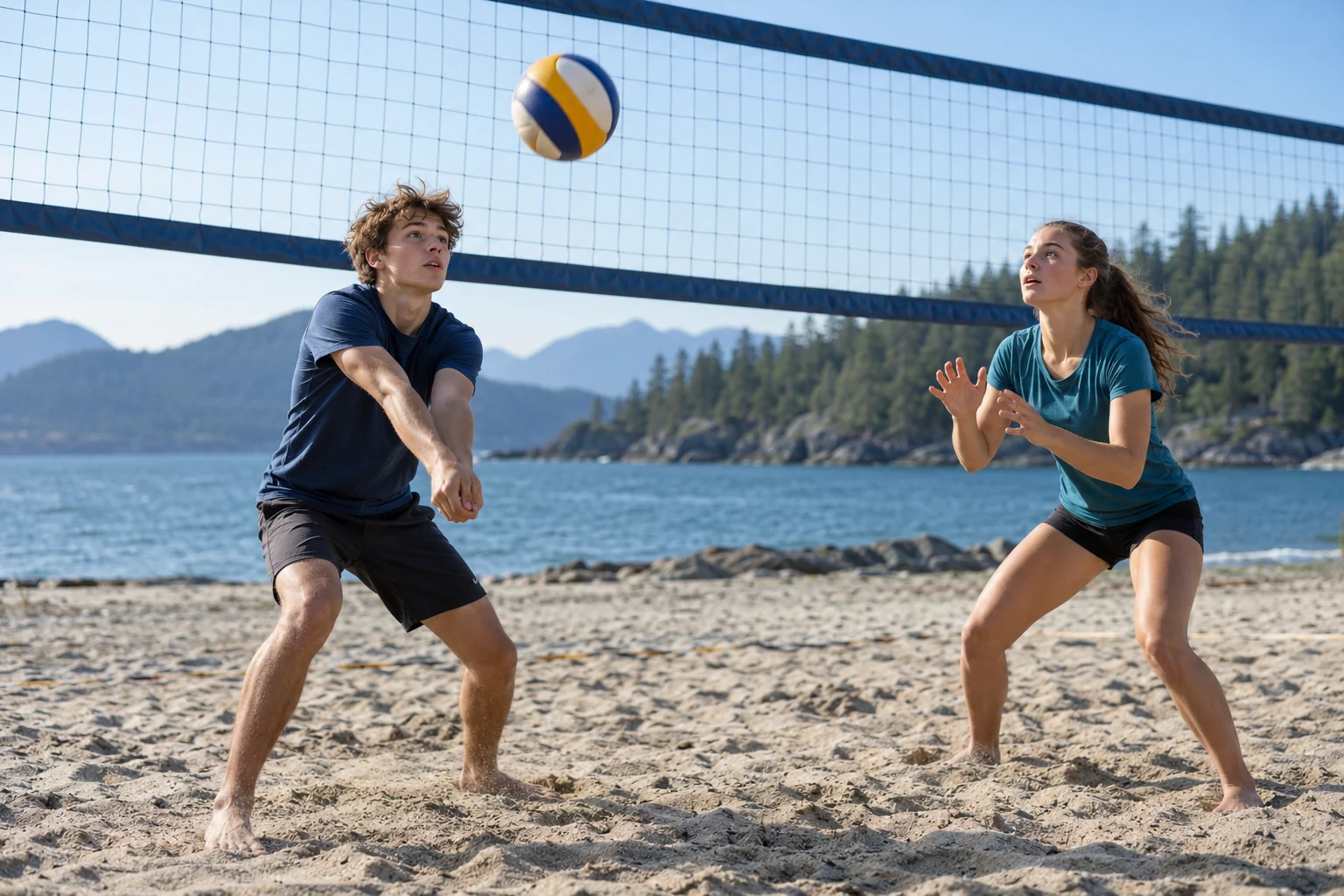
Beach can be a separate competitive pathway, a way to develop skills alongside indoor volleyball, or simply a summer activity your child enjoys. Start with their goals and recovery needs, then choose the right training and competition commitment.
The official beach pages checked October 4, 2026 still carry 2026 information, and some regional listings are older. Use them to identify contacts and understand the process. Confirm the 2027 calendar, age rules, memberships and registration terms when published; previous dates and fees are not a 2027 quote. [6, 7]
Choose the kind of program first
| Option | What to clarify |
|---|---|
| Introductory camp or recreation | Age and skill grouping, supervision, session length and whether a partner is needed. |
| Weekly coached training | Coach-to-athlete ratio, useful court time, technical feedback and how individuals are paired. |
| Competitive beach program | Selection criteria, partnership expectations, tournament coaching and travel commitments. |
| Team BC pathway | Current eligibility, selection process and commitments on the official program page. Club enrolment does not itself establish selection. [8] |
What good beach coaching should offer
Ask how athletes will learn serve receive, setting, attacking, serving, movement on sand and tactical decisions. For two-player beach, both athletes need broad skills and clear communication. A good indoor player still needs time to learn beach-specific rules and habits.
- How many athletes share each court, and how much time will they spend actively playing?
- Are groups matched by experience and goals, with adjustments when needed?
- Does the coach give both partners feedback and teach them how to solve problems together?
- Is coaching at tournaments included, optional or unavailable?
- Are coaches’ qualifications, safeguarding expectations and insurance clear for this program?
Choosing a partner without parent politics
Let the athletes practise together before making a season-long commitment. Compare availability, communication, work ethic, tournament goals and how each responds to mistakes. Friendship can help, but compatible expectations matter too.
Agree on the events you will enter, who registers, how expenses are split and what happens if one athlete is injured or unavailable. Ask the organizer about partner changes and refunds before entering. If a partnership ends, communicate directly and respectfully; avoid announcing blame in a group chat.
For an athlete signing up alone, ask whether the program helps find a partner, rotates training pairs or expects the family to arrange everything. Never assume a training registration guarantees a tournament partner.
Training enrolment and tournament entry are separate questions
Ask who enters the team, which membership each player needs and whether both athletes must complete roster acceptance. Volleyball BC publishes registration instructions, beach rules, a calendar and refund information on its youth outdoor page. Requirements can differ by event; check the current instructions before paying. [7]
- Confirm age eligibility for beach rather than copying the indoor category.
- Check entry limits, registration deadlines, waitlists and cancellation terms.
- Find out whether entry requires qualification, ranking or a selection process.
- Confirm the venue and both days of a multi-day event before booking travel.
- Treat Provincials, Nationals and Team BC as separate decisions with their own terms.
Budget for the complete beach season
List training fees, memberships, event entry per team, coaching at events, equipment and all travel. Agree which shared costs are per athlete and which are split between partners. Include ferries, parking, accommodation and meals where relevant.
Ask what happens to paid training if a session is cancelled, a partner leaves or your athlete is selected for another program. Compare the cost per useful coached session as well as the headline fee. Extra summer training should fit alongside school, family time and recovery.
Outdoor conditions and a sustainable workload
Request the program’s cancellation process for heat, smoke, lightning and unsafe court conditions. Ask who checks conditions, how parents are notified and what emergency arrangements are in place. Volleyball BC’s youth outdoor page links its heat policy and other safety resources. [7]
Plan access to drinking water, shade and breaks, and check the playing surface and supervision. Tell each coach about the athlete’s other training and competitions so the combined schedule is visible. Encourage athletes to report pain or fatigue rather than feeling they must protect a paid place.
Find beach programs by zone
Regional starting points are included within the eight-zone directory. Volleyball BC’s beach club page is a separate resource from its indoor directory. An indoor club listing does not confirm that it operates a beach program. [6]
Before registering
- My athlete wants this program and understands the training and competition plan.
- We know whether a partner is required and how pairing works.
- We have confirmed court time, coaching, membership and supervision.
- We understand all fees, cancellation terms and event-entry responsibilities.
- We have a manageable travel plan and time for recovery.