
Explore the guide & resources
Team fit and meaningful development
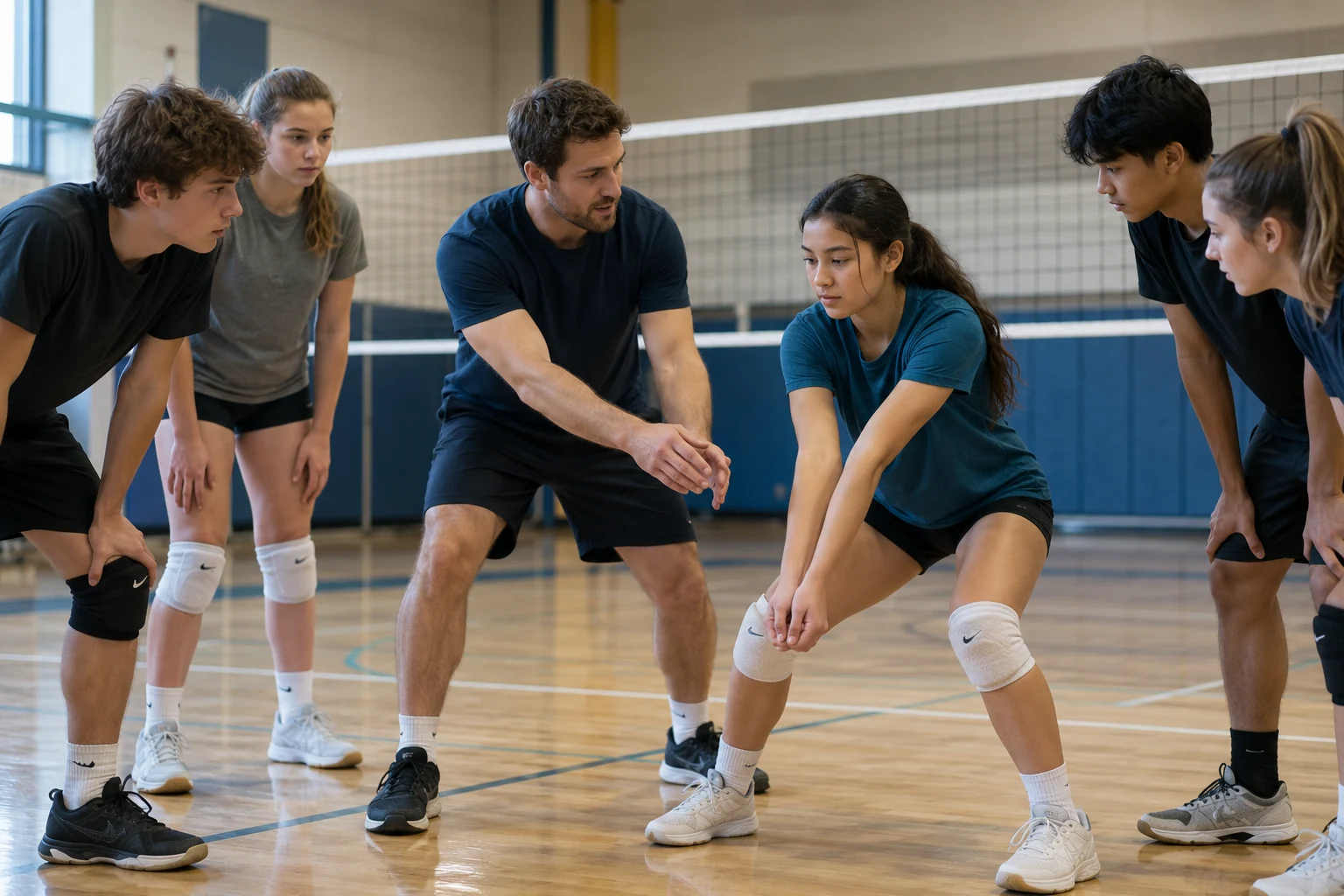
A first team may offer demanding practices but little match experience for a particular athlete. Another team may offer more responsibility and useful repetitions. Compare the role and coaching available to your child, rather than treating the team label as the decision.
Questions that reveal the likely experience
- How many setters, middles, outside hitters and defensive players are expected? Will players train more than one role?
- What happens to a reserve player during practice? Do they receive feedback and game-like repetitions?
- How does court time change between development events and championship matches? Which age-specific rules apply?
- What can the athlete improve to earn a larger role, and when will progress be reviewed?
- How are absences, illness, injury and school commitments handled?
POSITIONAL FLEXIBILITY · BUILD A COMPLETE PLAYER
Learn the whole game. Keep your options open.
Young athletes should have meaningful opportunities to learn every skill and explore as many positions as appropriate to their development.
Be willing to pass, set, serve, defend, attack and learn different responsibilities. A position label should leave room for growth.
Early development should build a volleyball player before narrowing that player’s options. A child who is currently tall should still learn ball control. A player who enjoys left side should still learn to set a second ball and understand blocking from another part of the net. A young setter should also receive suitable opportunities to attack and defend.
Exposure needs coaching and useful repetitions. Rotating a child into an unfamiliar role once, without explanation or feedback, does not amount to teaching that position. Ask what the athlete will practise, how they will be supported and when progress will be reviewed.
What the Canadian development guidance says
Volleyball Canada’s LTD 3.0 roadmap recommends no specialization or playing two or more positions across its early and late Train to Train stages, shown at approximately 12–14 and 14–16. Its later Learn to Compete guidance allows a primary position focus and describes full specialization or two-position combinations. These are development recommendations, not a universal competition rule or a rigid birthday deadline. [P1]
The 15–16 skills matrix also includes second-ball setting for non-setters and transition movements across positions. This is a useful reminder that a developing player’s skills should extend beyond the usual job title. [P2]
Keep a primary role without closing the other doors
A coach may give an athlete a main match role while teaching additional skills and a second position in practice. As athletes progress, more focused training can be appropriate. The aim is thoughtful development, with opportunities suited to the athlete and programme.
This does not require identical match time in every position or ignoring the competition’s rules. Talk about the development plan separately from a particular starting line-up. Check applicable age-group and libero provisions through the Officiating resource.
More skills give the team more options
The examples below illustrate why positional flexibility is worth developing. They are practical coaching examples, not guarantees of selection or extra playing time.
| Current role | Additional learning to explore | A useful situation |
|---|---|---|
| Left side / outside hitter | Right-side responsibilities, second-ball setting, passing and defence. | Helping when the setter takes the first contact or the team changes its attacking options. |
| Middle | Serve receive, back-row defence, setting and attacking from another area. | Remaining comfortable with the ball when a rally takes the player outside the usual task. |
| Setter | Attacking, passing and blocking alongside setting. | Understanding what hitters need and contributing when another player sets. |
| Right side / opposite | Serve receive, left-side attacking and second-ball setting. | Adapting when the line-up or available personnel change. |
| Defensive player / libero | Setting and reading attackers; suitable attacking practice where appropriate. | Providing a useful second contact and developing an understanding of the whole rally. |
USA Volleyball’s Developing Complete Players coaching article similarly encourages teaching skills beyond a player’s specialist role. It is a coaching perspective, rather than a study proving that multi-position training guarantees recruitment. [P3]
Don’t pigeonhole yourself into one position.
You may hear the saying that left sides are “a dime a dozen.” Treat that as a reminder to expand your contribution, rather than a measured claim about player numbers or a reason to dismiss the position. Left side can be an excellent role. Build the passing, defence, serving, decision-making and adaptability that support it.
“I enjoy left side, and I want to become a complete player. What can I learn in another role, and which skill would make me more useful to this team?”
Questions for the coach before you commit
- Will young athletes receive meaningful instruction in multiple positions?
- Which skills does everyone practise, including setters, middles and defensive players?
- What primary and secondary roles could my child learn this season?
- Will the second role be taught in practice, suitable matches or both?
- How do you decide when an athlete is ready for more specialization?
- How do you review a role if the athlete’s skills, interests or development change?
A clear answer names the learning opportunities and how the coach will support them. For example: “Your main role is middle, and we will also teach right-side responsibilities, passing and second-ball setting, then review progress in six weeks.” That is more useful than an unexplained permanent label.
Put it into the athlete’s development plan
- Identify the foundation: ask which volleyball skills need attention regardless of position.
- Choose a second learning role: agree on a suitable opportunity with the coach.
- Practise with instruction: seek purposeful repetitions, feedback and chances to apply the skill in play.
- Review the learning: assess understanding and progress, rather than judging the experiment by one awkward attempt.
For coaches, visit Coach Resources for continuing education and practice reflection. For athletes considering the next level, the Post-Secondary Reality resource explains how to assess opportunities without treating any position as a recruitment guarantee.
Sources for this subsection
Reviewed October 13, 2026. The LTD roadmap and skills matrix are developmental guidance; use current event documents for competition rules. The examples, questions and suggested development plan are Club Volleyball HQ guidance.
- Volleyball Canada: LTD 3.0 — A Roadmap for Volleyball in Canada — printed pages 40, 47 and 49 discuss positional development and later specialization.
- Volleyball Canada: Train to Train skills matrix, 15–16 — includes non-setter second-ball setting and skills across positions.
- USA Volleyball: Developing Complete Players — coaching perspective on broad skill development alongside specialist roles.
Distinguish disappointment from a poor environment
| What you observe | What to ask or do |
|---|---|
| Less court time with clear feedback | Ask for measurable development goals and a review date. |
| A role changes without explanation | Request a meeting about the original expectations and the new plan. |
| A coach also coaches their own child | Ask how selection, feedback and complaints are independently reviewed. The relationship alone is not proof of favouritism. |
| Payment or extra lessons implied to secure a role | Ask for the policy in writing and whether the purchase affects selection or playing time. |
| Humiliation, threats or unsafe conduct | Prioritize safety and use the reporting process rather than treating this as a court-time dispute. |
Evaluate how the coach teaches
Watch how the coach responds to a repeated mistake, a weaker player and a difficult loss. Useful correction explains the task and gives the athlete a way to improve. Ask whether your child feels able to request help or disclose pain.
High expectations can be appropriate. Public shaming, personal insults and pressure to hide an injury should not be accepted as the price of competitive volleyball.
Be cautious about future promises
Ask what “exposure” actually includes: which events, what film, who communicates with prospective programs and what the athlete must do independently. No club can promise a university place or scholarship on another institution’s behalf. Choose the present development environment as carefully as the future possibility.
Compare offers using the same questions
| Priority | Evidence to seek |
|---|---|
| Coaching | Named coach, feedback approach, planned practice structure and supervision. |
| Development | Likely role, practice repetitions, positional flexibility and progress reviews. |
| Playing time | Written policy, age-specific rules and how expectations change at championships. |
| Family fit | Actual gyms, travel calendar, full budget and withdrawal terms. |
| Trust | Clear answers, written commitments and independent complaint review. |
Mark each answer confirmed, verbal or unknown. Let your athlete weight the priorities. If a club cannot name the coach yet, ask when that will be resolved and what happens if the eventual assignment changes your decision.
Review the season after six weeks
Ask what the athlete is learning, whether they understand their role and whether promised practices are happening. Request a small number of specific goals and a review date. Development is easier to assess through skills, useful repetitions and feedback than through a medal count alone.